| Timeline | Alternate history where Communist revolution in China did not occur |
| Political system | Democratic, capitalist system under the Kuomintang (Nationalist) party |
| Economic development | Rapid industrialization and modernization, becoming a global economic powerhouse |
| Relationship with the West | Generally more stable, with tensions and rivalries still present |
| Comparison to real-world nations | Resembles development of countries like Taiwan or South Korea |
| Retention of traditional identity | Maintains its political and cultural heritage despite modernization |
In this alternate timeline, the Chinese Civil War ended with the Kuomintang (Nationalist) forces of the Republic of China emerging victorious over the Communist Chinese Communist Party. As a result, China developed along a dramatically different trajectory than the People's Republic of China in our own history.
Following their triumph over the Communists in 1949, the Kuomintang government led by Chiang Kai-shek consolidated control over the Chinese mainland. Rather than fleeing to Taiwan, the Nationalist regime remained in power in Beijing and other major cities.
The Republic of China under Kuomintang rule set about rebuilding the country's economy and infrastructure, which had been devastated by decades of war. Drawing on Western economic models and American technical assistance, they implemented a program of state-led capitalist development similar to the "Asian Tiger" economies that would later emerge in places like South Korea and Taiwan.
In the decades after the civil war, the Republic of China evolved into a more pluralistic, democratic system - though always with the Kuomintang as the dominant political force. A degree of authoritarianism and one-party rule remained, but there was greater space for opposition parties, civil society, and free markets to develop compared to the rigid Communist system in our timeline.
This combination of authoritarian control and market-oriented policies fueled rapid industrialization and economic growth in China. Major state-owned enterprises co-existed with a vibrant private sector, as the country transformed from an agrarian economy into an industrial and technological powerhouse. Chinese firms became globally competitive in sectors like manufacturing, finance, and information technology.
As the Republic of China's economy boomed, it also played an increasingly prominent role in Asian and global affairs. The Kuomintang government forged close diplomatic and economic ties with other non-Communist Asian nations, as well as the United States and Western Europe. China became a bulwark against the spread of Communism in the region, supporting anti-Communist movements and regimes.
However, tensions still existed between China and the West at times, particularly over issues of human rights, Taiwan, and territorial disputes. The Republic of China also faced off against the rival Communist powers of the Soviet Union and North Korea on the geopolitical stage. Overall though, the lack of ideological conflict allowed for a more stable, pragmatic relationship between China and the major Western powers.
Without the radical social engineering of a Communist revolution, traditional Chinese culture, customs, and Confucianism remained central to the identity of the Republic of China. There was greater space for the arts, literature, and academia to flourish compared to the restrictions of our timeline's PRC.
At the same time, the Republic of China was not trapped in the past - it underwent a process of modernization that saw the rise of an educated, urban middle class, the advancement of women's rights, and the incorporation of Western ideas and lifestyles. Chinese society evolved, but within the broader context of its historical and cultural foundations.
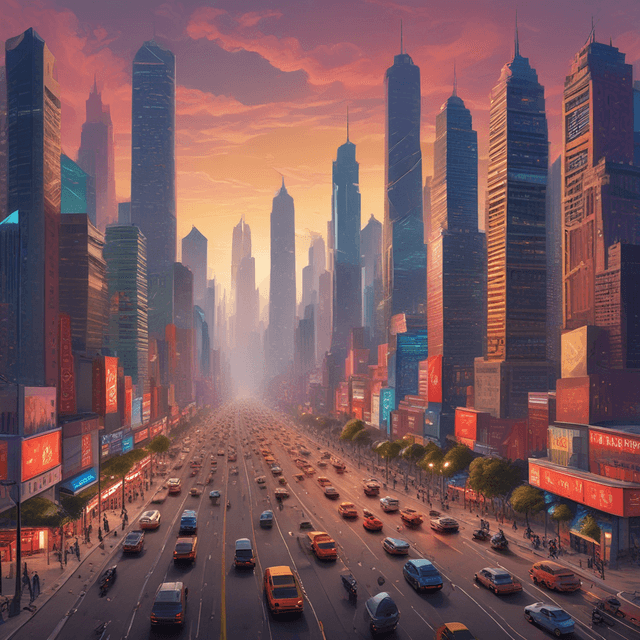
Today, the Republic of China remains a major global power - though not quite to the same towering extent as the People's Republic in our own world. It is an economic juggernaut, the second-largest economy after the United States, and a technological leader in fields like renewable energy, artificial intelligence, and biotechnology.
Politically, the country is considered a flawed but functioning democracy, with the Kuomintang party facing occasional electoral challenges from opposition forces. Civil liberties and human rights are more protected than in our timeline's China, though the government still maintains a degree of authoritarianism.
Tensions and rivalries with the West and other powers like Japan and India still exist, but the lack of deep ideological divides has allowed for more stable, pragmatic relations overall. The "China Model" of state-guided capitalism is viewed with equal parts fascination and suspicion around the world.
Despite its differences from our timeline, this alternate China remains a complex, rapidly evolving global power - a testament to the diverse paths nations can take in shaping their own histories.
